For projects worldwide, send an inquiry Inquire. From outside China dial +86-400-611-6009

Whole-home acoustics / Reverberation
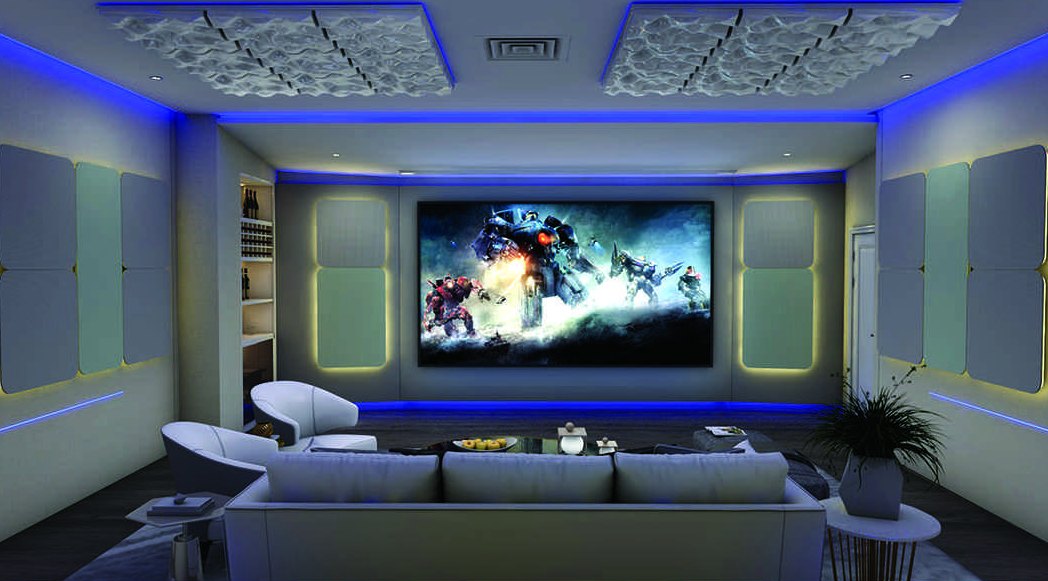
Reverberation time is how long a sound takes to fall 60 dB. It depends on volume, surface area and absorption. Homes typically want 300–800 ms (Tsinghua). WELL v2 S04: learning / meeting rooms under 280 m³ at t ≤ 0.6 s; 280–570 m³ at 0.5–0.8 s; dining and rooms with PA at t ≤ 1.0 s. Cinema decay is shorter than living rooms.
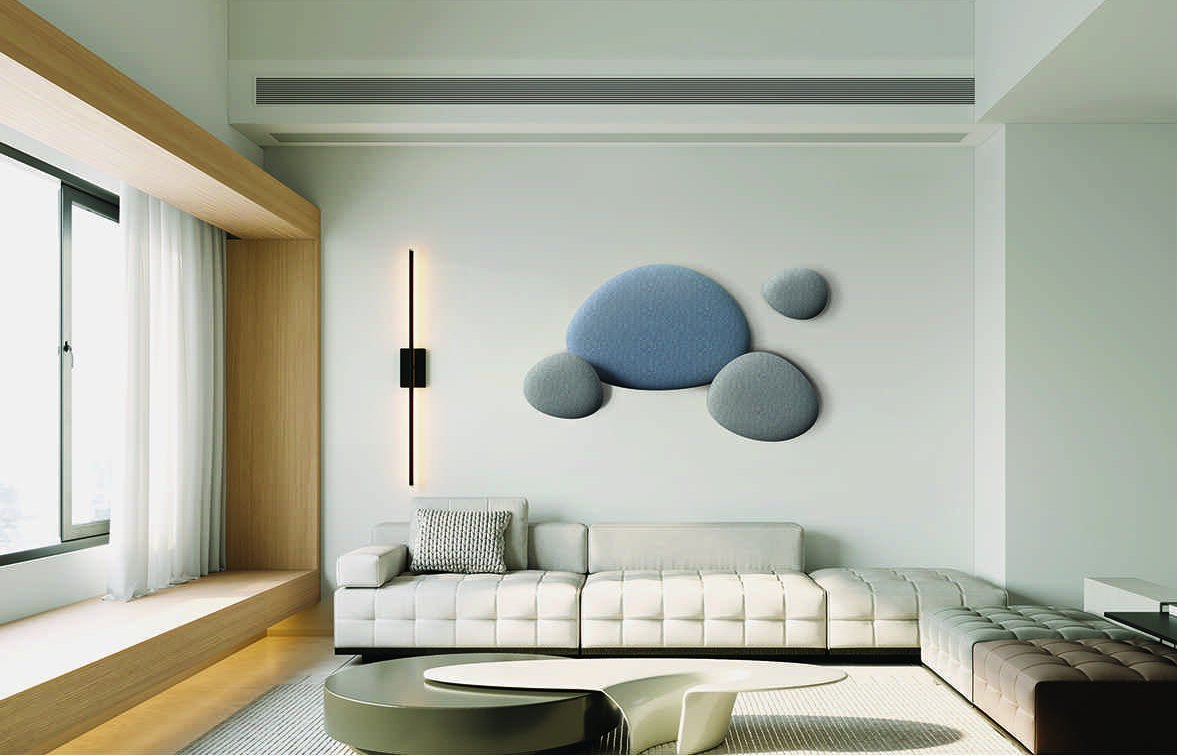
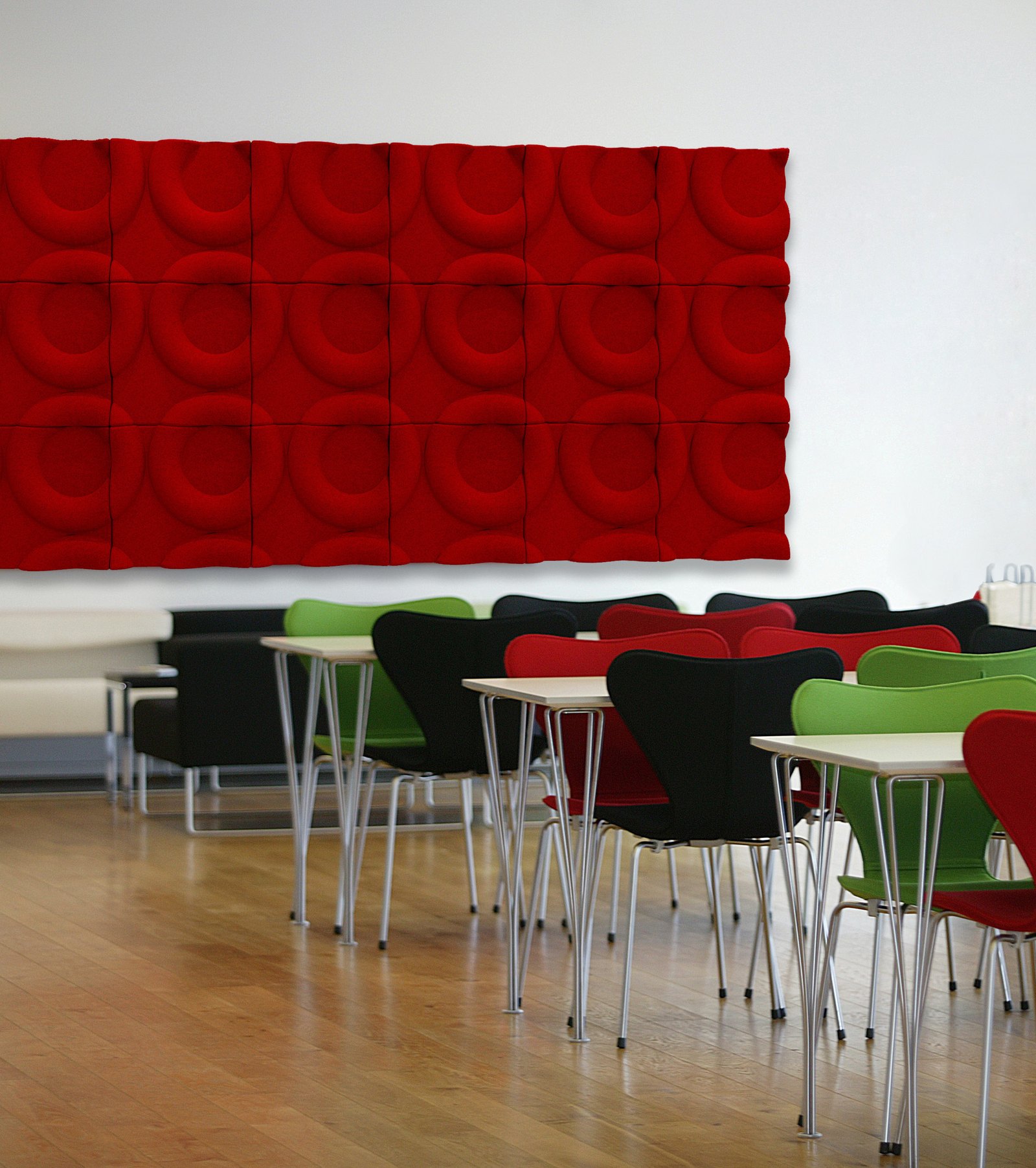
Absorption takes energy; diffusion opens the field. A dead room makes speech harsh and music dull. WELL S05: the ceiling is the largest surface — open work areas need NRC / αw 0.75 on at least 75% of usable ceiling (1 point) or 0.90 on all of it (2 points); meeting / learning rooms 0.75 on at least 50% of ceiling and 0.75 on 25% of two walls. That matches the brand-guide figure of VIEW ceiling coverage above 75% in open plans.
Soundbox (Hong Kong) treats absorption and diffusion as a designed system, not a wall of one panel. The engineering catalogue: when a wave hits ceiling, wall or floor, part is absorbed; the ratio is the absorption coefficient, averaged over all angles in a diffuse field. Halls finished on a “stick more absorption” idea often miss the target — building acoustics, electro-acoustics and interior must be drawn together.
Bonda floor cavities also use absorption (rock wool, glass or polyester): fill the plan area but not the full depth, leaving an air gap. That treats the floor void; it does not replace ceiling and wall absorption.
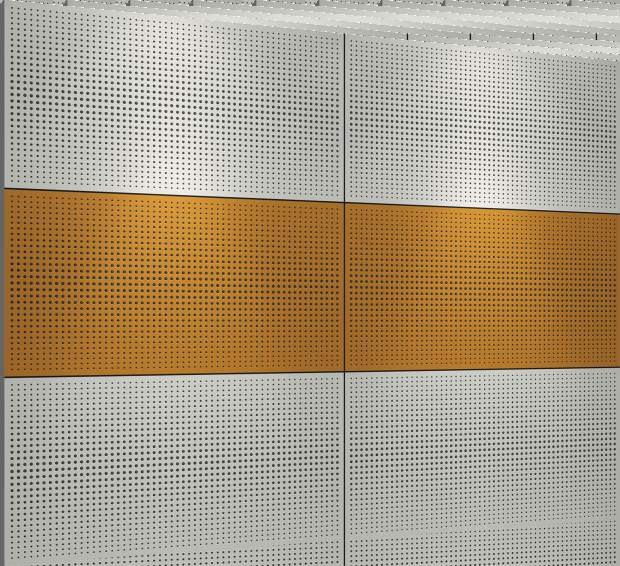
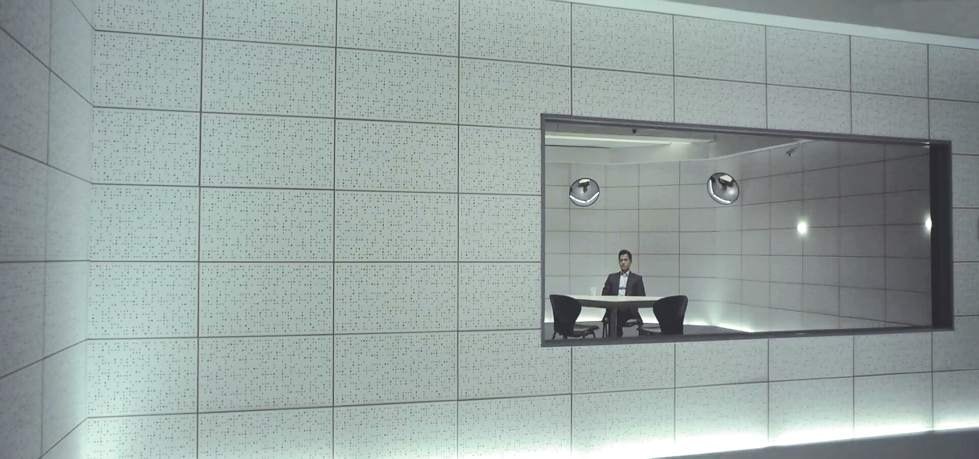
Sources: WELL v2 S04 / S05; Soundbox engineering and easy-system catalogues; Bonda floor method statement (cavity wool); Gabriel VIEW / Mono / Cubic. An NRC on a sheet is not this room’s decay curve.







 中文
中文 EN
EN


